

There is a quiet revolution happening in plant medicine — and it has nothing to do with dramatic ceremonies or altered states. It is the growing recognition that some of the most powerful healing available comes in small, potent drops of carefully prepared botanical extract, taken with intention as part of a daily practice.
The Amazon has always known this. Long before the world became fascinated with ayahuasca and the more visionary plant teachers, Amazonian peoples were working with extracts, tinctures, and concentrated plant preparations for everyday healing — for sleep, for calm, for immunity, for heart opening. These were the medicines of maintenance, of subtle but sustained restoration.
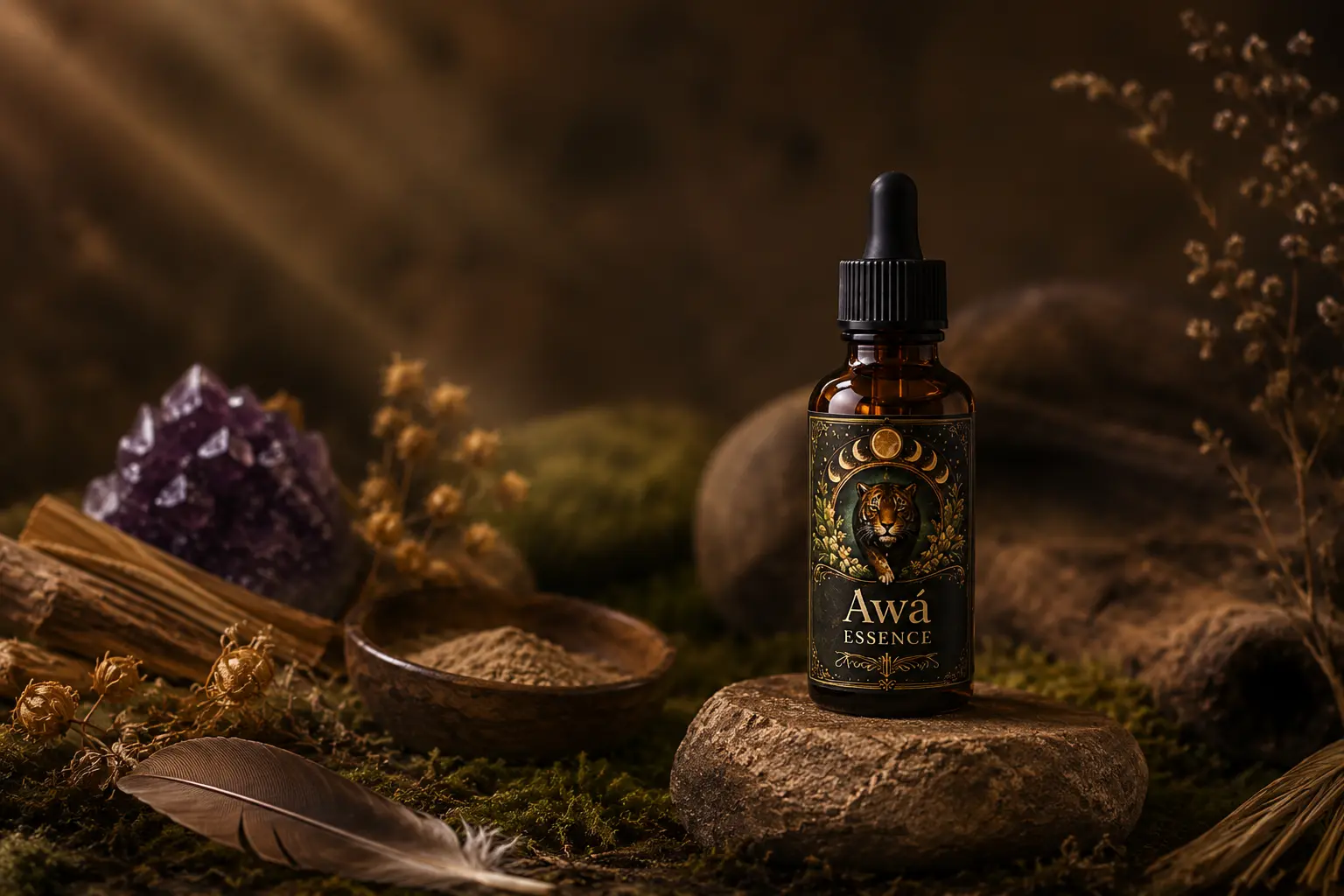
AWA Essence carries three of these foundational extracts. Here is what each one is, where it comes from, and what it is here to offer you.
Caapi Extract — Calm & Balance
Banisteriopsis caapi — the caapi vine — is best known in the West as one of the two primary ingredients in ayahuasca. But the vine itself, used alone as an extract without the admixture plants, has a profoundly different and gentler character.
On its own, caapi is a master of the nervous system. It contains naturally occurring beta-carbolines — harmine, harmaline, and tetrahydroharmine — that act as monoamine oxidase inhibitors and serotonin reuptake inhibitors, meaning they support the body’s own mood regulation systems in a way that is genuinely comparable to mechanisms targeted by modern antidepressants.
But the experience of caapi extract is nothing like pharmaceutical intervention. It is more like being wrapped in something warm and steady. A gentle lifting of low-grade anxiety. A softening of the internal critic. A return to equilibrium that does not feel forced.
Tribes have used caapi extract for centuries to support emotional balance, ease grief, restore motivation after periods of darkness, and create the internal conditions necessary for spiritual growth. It is a medicine for the long slow work of becoming well — not a dramatic shift, but a reliable and gentle return.
Who it is for: Those navigating anxiety, low mood, emotional fatigue, or the kind of depletion that accumulates quietly over time without any single identifiable cause.
Passiflora Extract — Rest & Renewal
Passiflora incarnata — passionflower — grows across the Americas and has been used medicinally by indigenous peoples from the Amazon to the Andes to North America for longer than written history can record. Its action is both simple and profound: it is one of the most effective natural nervines on earth.
A nervine is a plant that calms and nourishes the nervous system directly. Passionflower works by increasing GABA activity in the brain — the same mechanism targeted by pharmaceutical sleep aids and anti-anxiety medications — but without the dependency, the grogginess, or the morning heaviness that synthetic versions produce.
The result is sleep that is genuinely restorative. Not just hours of unconsciousness, but the kind of deep, dreaming sleep that the body uses to consolidate memory, repair tissue, regulate hormones, and process emotional experiences that could not be integrated during waking life.
Passiflora extract is also used during the day for those who carry a background hum of anxiety — the kind that does not announce itself dramatically but quietly drains energy and focus across the entire day. Small doses bring a calm clarity, not sedation.
Who it is for: Those struggling with sleep, racing thoughts at night, background anxiety, nervous tension, or the feeling of never fully recovering no matter how much rest you get.
Copaíba Extract — Heart Opening
Copaíba is perhaps the least known of the three in Western botanical circles, and perhaps the most extraordinary. The resin of the Copaifera tree, native to the Amazon basin, has been used by tribal peoples across Brazil, Peru, and Colombia for a vast range of purposes — wound healing, anti-inflammation, respiratory support, and most significantly, what indigenous traditions describe as opening the heart.
Copaíba resin is exceptionally rich in beta-caryophyllene — a sesquiterpene that interacts directly with the body’s endocannabinoid system, specifically the CB2 receptors, without producing psychoactive effects. This makes it one of the most potent natural anti-inflammatory agents known, addressing inflammation at a cellular level throughout the body, including in the brain and nervous system.
But the reason copaíba carries the designation of heart opener in Amazonian tradition goes beyond its biochemistry. Those who work with it consistently describe a softening — a loosening of the protective armoring that accumulates around the heart after years of grief, disappointment, and the everyday injuries of human connection. Not an emotional overwhelm, but a quiet willingness to feel more, to open more, to allow more.
This is a medicine for those who are ready to soften. Who have done enough protecting and are ready to begin receiving.
Who it is for: Those carrying emotional armoring, grief, unexpressed love, heart-related tension, or anyone seeking to deepen their capacity for connection, vulnerability, and spiritual openness.
How to Choose
If you are not sure which extract is calling you, start here.
Ask yourself: What does my body most need right now?
If the answer is steadiness, a return to baseline, relief from the weight of your own mind — begin with Caapi.
If the answer is rest, recovery, sleep that actually restores — begin with Passiflora.
If the answer is openness, softening, the courage to feel more fully — begin with Copaíba.
These are not medications. They are allies. They work with what is already present in you, supporting your body’s own intelligence rather than overriding it. As with all plant medicines, the quality of your intention shapes the quality of your experience. Approach them with respect, with curiosity, and with the understanding that healing is rarely linear — but it is always worth pursuing.
The Amazon has been waiting a long time to offer you these gifts. You only need to receive them.